

 15/10/2026
 Grup Efebé
Hot weather in schools has once again highlighted an increasingly important need: classrooms where children can learn and spend time together in comfort, even during periods of high temperatures.
Preventing overheating in classrooms is essential for pupils’ well-being and for adapting learning environments to the challenges of a changing climate.
Against this backdrop, the Catalan Government’s Actualitza Clima Plan aims to improve heating, cooling, ventilation and energy efficiency across 2,530 public schools in Catalonia through a phased programme running until 2031. The initiative provides fresh momentum for the transformation of educational spaces.
The concept of a climate refuge also encourages us to consider how schools can offer protection from extreme heat. In classrooms, this means looking at solar exposure, ventilation, insulation and cooling systems as part of an integrated approach.
Every classroom needs a tailored approach
The orientation of the building, the size of its windows, insulation, building materials and the number of people using each room are all factors to consider before planning any improvements.
Even two classrooms within the same school may have very different requirements. That is why improving thermal comfort in schools calls for solutions tailored to each space, combining different measures according to its specific characteristics.
Some of the options to consider include:
- Solar shading: technical blinds, roller shades and other systems that limit direct sunlight and reduce glare.
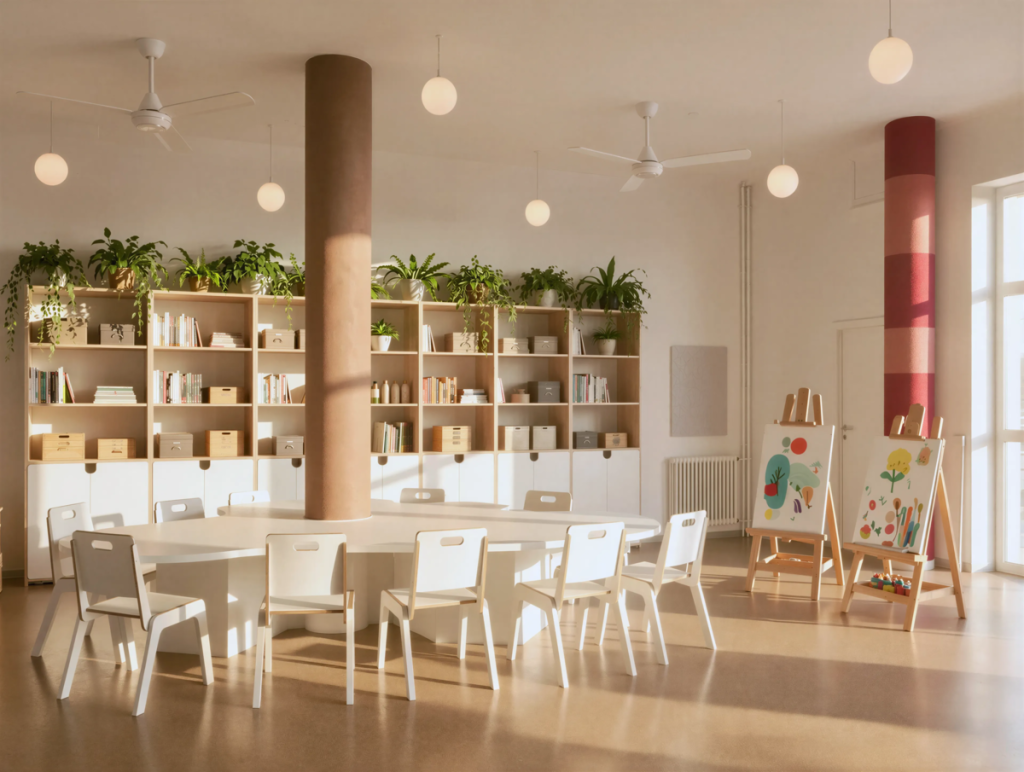
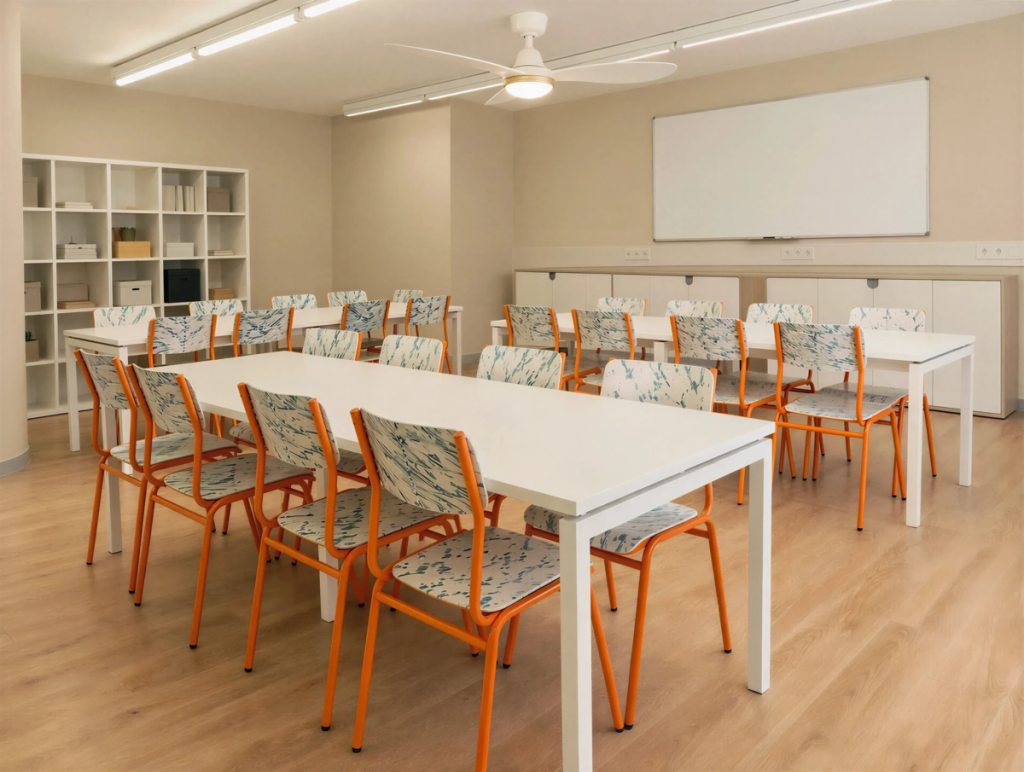
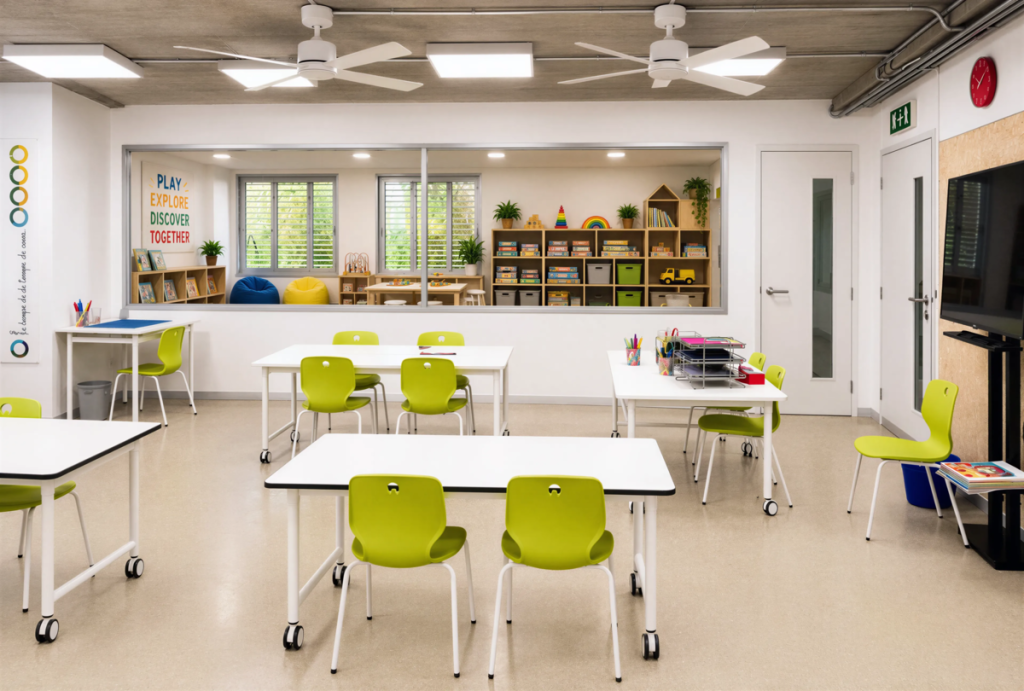
- Ceiling fans: improve air circulation and help people feel cooler, particularly when used alongside other measures.
- Ventilation and fresh air supply: support good indoor air quality and should be considered together with temperature control.
- Heating and cooling systems: equipment suited to the building, the number of occupants and the needs of each classroom.
- Window, door and building envelope upgrades: improvements that can help reduce heat gain in summer and enhance the school’s energy efficiency.
The key is to develop a coherent combination of measures. Installing equipment is only one part of the process: it is equally important to consider how it will be used, its energy consumption and its maintenance requirements.
Plan ahead to be ready on time
Autumn is an ideal time to assess the needs of educational facilities and start preparing classroom improvement projects for 2027.
Planning in advance makes it easier to explore different options, prioritise investment and schedule work around the school calendar, minimising disruption to teaching and learning.
At Grup Efebé, we begin by listening to the school’s team and visiting the facilities to identify their specific needs. We then develop appropriate solutions and coordinate their implementation, always taking the school’s day-to-day activities into account.
This approach reflects our experience in designing and transforming learning spaces, where design, comfort and functionality must respond to the people who use them.
Preparing classrooms for hot weather means looking after the spaces where pupils spend much of their day. It requires technical expertise, careful planning and a genuine understanding of everyday school life.
Shall we prepare your classrooms for 2027?
At Efebé, we help schools assess their needs and plan the most suitable solutions to improve thermal comfort in their learning environments.
